Since Blogger / Blogspot are Google domain properties, the work for a blogger is fairly easy when it comes to getting indexed by Google's search bot. One would think that these sites are already optimized for this purpose. The real task is funneling the appropriate audience for the content that is being hosted or written about.
For this example I am using a recipe that I cross-posted to the LiveJournal Foodporn community site and to my own blog where I host the pictures of various cooking experiments. In my initial research into the recipe, I found that while most of the ingredient ratios were the same across Mexican and Latin American cultures, it was known by different names. Hence, the label tags that I used for identifying this recipe were: desserts:fruit, guava, pasteles de guayaba, pastelitos de guayaba y queso, pastry. In the body of the recipe, I have additional keywords: pastelitos de guayaba y queso, guava and cheese strudel.
The top 10 keyword sets (July 24-Aug 25, 2008) users typed into their search engine of choice (Google, Yahoo, AltaVista, or Dogpile) to get to this recipe page:

(click for larger image)
Now, I'd always thought of creating a recipes to match what people were looking for since there would be at least one user out there who might be looking for that recipe again. But, I'm really not sure how chipotlé and guava flavors really mingle together. They might work out quite well.
The marketing take-away: Know your audience. That's really the best way to market products, services, and informational content to prospective consumers and businesses.
In terms of SEO, all these keywords were the result of organic searches. Can the keyword phrases be purchased or used for AdSense? Certainly. TheFoodening site is as optimized as it's going to get with respect to Google site indexing. So what's next to boost traffic? More recipes based on keyword phrases that resulted in null content? More cross-posting of recipes to food and recipe sites to piggyback on search traffic? I suppose the real next step would be to select another recipe off my recipe experiment queue, do something creative with it, and post the results.
Related words:
guayaba = guava
queso = cheese
pastelitos = tarts, "pastries"
con = with
de = of/from
y = and
Strategy Analytics estimates that revenues from online games will reach $11.5 billion by 2011, a 25.2 percent compound annual growth rate (source: arstechnica news). In 2006, the North American subscription market hit $576 million, and Europe rose to $299 million. Europe has seen the fastest growth over the last few years, rising from $74 million in 2004, and is expected to see the most growth over the next few, as well (source: IGN).
There are two main methods that game developing software companies use to create revenue. These two methods aren't exclusive to graphic-based online games, the second option is also used by text-based online games such as MUDs.
Method 1. Retail the game client program for $30-60 per user account, and
1a. Either elect to have server game play for free: Guild Wars, NWN, etc.
1b. Or, have users also pay for a monthly subscription: WoW, City of Heroes/Villans
Method 2. Allow users to download the game client for free, and
1a. Have an in-game "store" that users use real world money to buy items for their in-game characters
1b. Exclusive use of special items and character equippables that greatly enhance playability for a fee
1c. Examples
MMOs aren't immune from the 4 (or 5, depending on who you consult) P's of marketing, otherwise known as the marketing mix: Product, Price, Place (distribution), Promotion, and entrepreneurship. Customer acquisitions and retention are key issues for MMOs, just as with any for-profit business. The MMO facet of the gaming industry is beginning to see the emergence of a high barrier to entry: Price, and I'm not talking about standard purchase fees, but rather how much it will cost a game developer and its VC investors to bring an MMO to market.
Who would have thought that when games made it to the online realm that bringing a game to market would cost $25+ million?
Read more?
Wikipedia definition of MMORPGMMO ProfitabilityGames with strong online components outsell the competition
Why the MMORPG subscription based business model is broken
Free-To-Play MMO Creators Should 'Show Us The Money'
I manage a few sites with varying degrees of slackerdom (what one does when not at work). Of the ones where I have embedded with Google Analytics code, I can see that the general audience would rather goof off than read content that's applicable to B2B/B2C marketing.
The Foodening, a food blog about cooking for one, making mistakes in the kitchen, and blathering about food. This site is advertised through my profiles on: LinkedIn, LiveJournal, Facebook, ResearchInfo.com, and Experts-Exchange.com.
Jul-Aug 2008 stats
visits: 150
absolute unique visits: 147
pageviews: 232
pages per visit: 1.55
avg time on site: 53 sec
bounce rate: 78%
Bounce rate is normal, after all, the posts are just recipes with kitchen notes. If you hit this site from an organic web search and don't find what you're looking for, would you stick around? Nearly all users come from the US, other countries that show up on the site usage report are Canada, Philippines, Australia, Hong Kong, Singapore, S. Korea, Bahamas, Romania, and Taiwan.
Ramblings of a Marketing Gurl (this site), a personal blogging site about marketing. It is advertised on my profiles at: LinkedIn, LiveJournal, Facebook, Experts-Exchange.com, my portfolio website, and just about every potential employer that I've applied to. Goal conversions are setup for this site and I am primarily seeing if visitors hit my marketing portfolio; of course this doesn't always track that well since I give the direct url to my work samples and visitors aren't funneled in from the top index level. Majority of visitors are from the US, but there are people from the UK, India, Germany, New Zealand, Pakistan, Sweden and Venezuela who also visit. This site isn't indexed with Google's Blogger.com.
Jul-Aug 2008 stats
visits: 27
absolute unique visits: 27
pageviews: 44
pages per visit: 1.63
avg time on site: 1 min, 22 sec
bounce rate: 62.96%
And, last of all, my personal/portfolio website on Googlepages. This site is not advertised at all, contains anti-spider code, isn't indexed on Google, and basically, the only visitors are those that I know personally whether by social group, networking, or job hunting. Why? I like my privacy even though I am on at least a half dozen personal and business social networking sites.
Jul-Aug 2008 stats
visits: 26
absolute unique visits: 17
pageviews: 90
pages per visit: 1.63
avg time on site: 4 min, 53 sec
bounce rate: 38.46%
Similar stats to my marketing blog? The two are usually packaged together. The biggest difference is average time on site where visitors are definitely spending a lot of time reading on my portfolio site. I've only recently discovered that my name isn't visible in large bold type on my personal/portfolio website nor on my marketing blog. Hmm, I shall have to fix that.
This is Latin for "seize the fish!"
In this every increasing world of global diversity where goods and services transfer across different cultures and socioeconomic demographics, it's important for homeland marketers to understand the prefixes that their marketing messages may hold or translate to when selling into another trade region.
Here are some of the most talked about classic cross-cultural marketing blunders:
The Japanese company Matsushita Electric was promoting a new Japanese PC for internet users. Panasonic created the new web browser and had received license to use the cartoon character Woody Woodpecker as an interactive internet guide. The day before the huge marketing campaign, Panasonic realized its error and pulled the plug. Why? The ads for the new product featured the following slogan:
"Touch Woody - The Internet Pecker." The company only realized what it had done when an embarrassed American explain what "touch Woody's pecker" could be interpreted as!
The word "mist" seems to get many companies into trouble. Poorly thought through uses of the name in Germany has resulted in "Irish Mist" (an alcoholic drink), "Mist Stick" (a curling iron from Clairol), "Cashmere Mist" (deodorant from Donna Karen) and "Silver Mist" (Rolls Royce car). "Mist" in German means dung or manure.
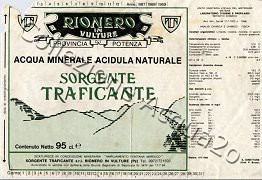
Traficante, an Italian mineral water found a great reception in Spain's underworld. In Spanish it translates as "drug dealer".
Honda introduced their new car "Fitta" into Nordic countries in 2001. If they had taken the time to undertake some cross cultural marketing research they may have discovered that "fitta" was an old word used in vulgar language to refer to a woman's genitals in Swedish, Norwegian and Danish. In the end they renamed it "Honda Jazz".
When Pepsico advertised Pepsi in Taiwan with the ad "Come Alive With Pepsi" they had no idea that it would be translated into Chinese as "Pepsi brings your ancestors back from the dead."
Read more?
and more?
and still more?
even more examples?
Ok, so you get the point. Plenty of companies have made a lot of cross-cultural mistakes when advertising to cultures outside their primary. How do you avoid such marketing catastrophes? Don't put up a trophy of a cat ass, for one. (Btw, this pun reference comes from the Piers Anthony Xanth novel series.)
Har har, for real...
1. Hire a translator who has lived and worked in the country/region you want to sell to.
2. If you're in a tough squeeze (e.g., no marketing budget), at least look up the phrases you want to use in a multi-language dictionary such as the KudoZ Open Glossary which offers up a field to search for slang definitions.
3. Read up on multicultural practices.
4. Visit a cross-cultural event in your area, observe and interact.
5. Don't become a case example for college students when your marketing campaign fails due to a cultural misunderstanding.
Disclaimer: This blog posting is intended to make new and existing SEO users aware of known Black Hat techniques and does not advocate the usage of such search engine optimization strategies.
In an earlier post, I touched briefly upon White Hat SEO basics and alluded to how ethics really doesn't play a part in whatever technique is employed when using search engine optimization. To brand ethics with SEO concepts is just silly. That's like saying everyone else is breaking a moral or legal requirement for the mass acquisition of inbound traffic and prospective customers. When in fact, no US laws are being broken here unless you're using the domain for cybersquatting and you have to prove that you own the website for legitimate purposes; which still might be construed as illegal with regard to the Anticybersquatting Consumer Protection Act.
Black Hat techniques attempt to improve rankings in ways that are disapproved of by the search engines, or involve deception. These include link buying, spamdexing, cloaking, keyword stuffing, creating doorway pages, link farming, link baiting, misrepresenting content, using hidden text to manipulate page rankings, etc.
And, there are significant penalties from using Black Hat techniques:
* Your sites get delisted from major search engines
* Your IP address gets blacklisted
* Your page rankings are significantly reduced
* Your urls become eligible for manual review prior to a search engine crawl
I'm not sure why any company with a legitimate product or services offering would consider employing BH methods to gain higher page rankings. Ignorance? Greed? It does happen, albeit infrequently, to large brand-driven companies.
Related Links:
Black Hat vs. White Hat Search Spam Debate
Google Webmaster Guide for SEO
Black Hole SEO: The Real Desert Scraping
Glossary:
Black Hat
Keyword stuffing
Marketing needs come in all sorts of flavors:
- I'm a chiropractor working 12 hour days. When do I have time for marketing?
- I'm a CPA and I can only take on clients within an X-radius driving distance.
- I'm a licensed psychologist looking to get new customers in the [region] area.
- I'm a writer for the entertainment industry and I have a script to pitch.
- I'm a wellness health professional with a small retail storefront, what's the best way to attract new and retain old customers?
The way marketing has evolved with the digital landscape has made it easier than ever for small businesses and sole proprietorships to market their products or services to new, undefined customer segments.
Budget has always been a factor for the type(s) of marketing programs used to acquire or retain customers. The deeper the pockets, the better the program? Not necessarily so. You can always use a "no-frills", open source application to handle some of the marketing. You could use Microsoft Word to design a sales brochure in-house and either print it yourself or at a local printshop. A marketer can help you craft the right message and what to say that sells your services to a new customer.
People have to make the time to seek out marketing best practices for their industry and to utilize that knowledge that separates them from the competitors who attended the same seminar on how to market their business.
No one knows a business like the owner of a company. This is why effort is a key factor for marketing success. If you're not working with an outside marketing consultant or have one in-house, you'll be doing all the marketing yourself in addition to everything else your company does. It takes an active understanding of what marketing tools are best for your line of business. The days of flat advertising in the "yellow book" are no longer relevant.
Here's a tip on competitive intelligence:
Find a company that's similar to your own and search for them with all the methods you know. Telephone book ad, online listing, local flyer/message board ad, or where they appear in a search query on your favorite search engine. What is it about their marketing message that caught your attention? If you were their customer, would you respond?
The Pareto principle (a.k.a the 80-20 rule, Haddad's Theorem) states that 80% of the effects come from 20% of the causes. In the business world, this has come to mean that 80% of your revenues typically comes from 20% of your customers. Businesses have long sought after more customers who are akin to the 20% that generates the most revenues. How is it done? One method is to use customer segmentation.
Is this scenario familiar to you?
You're putting together list acquisition specs for business unit of your company (or your client's). The BU manager wants to launch a customer acquisition campaign that targets all small and medium sized businesses which have 100-500 employees, have $XX+ millions in revenues, and are geographically located in southern California. Their best repeat business customers comes from professional offices such as engineering, architectural, CPA, and law firms.
Do the specs and requirements match?
Traditional segmentation used to mean that you'd take a database (or list) of customers and carve them out into customer groups based on demographics or socio-psychographic data (e.g., Claritas). Value-based segmentation looks at groups of customers in terms of the revenue they generate and the costs of establishing and maintaining relationships with them. ROI is not just a financial statement hot item, it is a typical key performance indicator (KPI) to gauge how useful customer acquisition strategy is by comparing what measures it took to get that customer's business, how many units of X they purchased, and how many more units of X they intend to purchase.
Just who are your customers anyways?
The basics of customer segmentation answers the following parameters of any industry its applied to: Who, What, Where, Why, and How.
Who
Consumers? Businesses?
What
Your products or services.
Where
Not just for postal recipients. Did they respond to web or email advertisements? Attend a webinar? Buy directly from you or from an affiliate merchant?
Why
The reasons(s) why your products or services won the sale. Is your product or service better than that of the next best substitution product/service? Cheaper? Easier to use? A simple followup with a customer survey usually answers this and keeps the feedback door open.
How
How was it purchased? online? at a physical storefront? at the company store? at a tradeshow/seminar event?